Advertising Democracy research project

Can Democracy Be Advertised?

AdDem explores whether short, accessible democratic messages can strengthen citizens’ democratic commitment in an attention-scarce information environment.

Scroll the story
The democratic challenge

Old interventions are losing the attention battle.

Elaborate facts, figures and long arguments have struggled to strengthen democratic values. AdDem begins with a sharper premise: democratic communication must meet people inside the media environment they actually inhabit.

“Most do not want to spend precious time reading long, complex, democratic information from researchers and experts.”

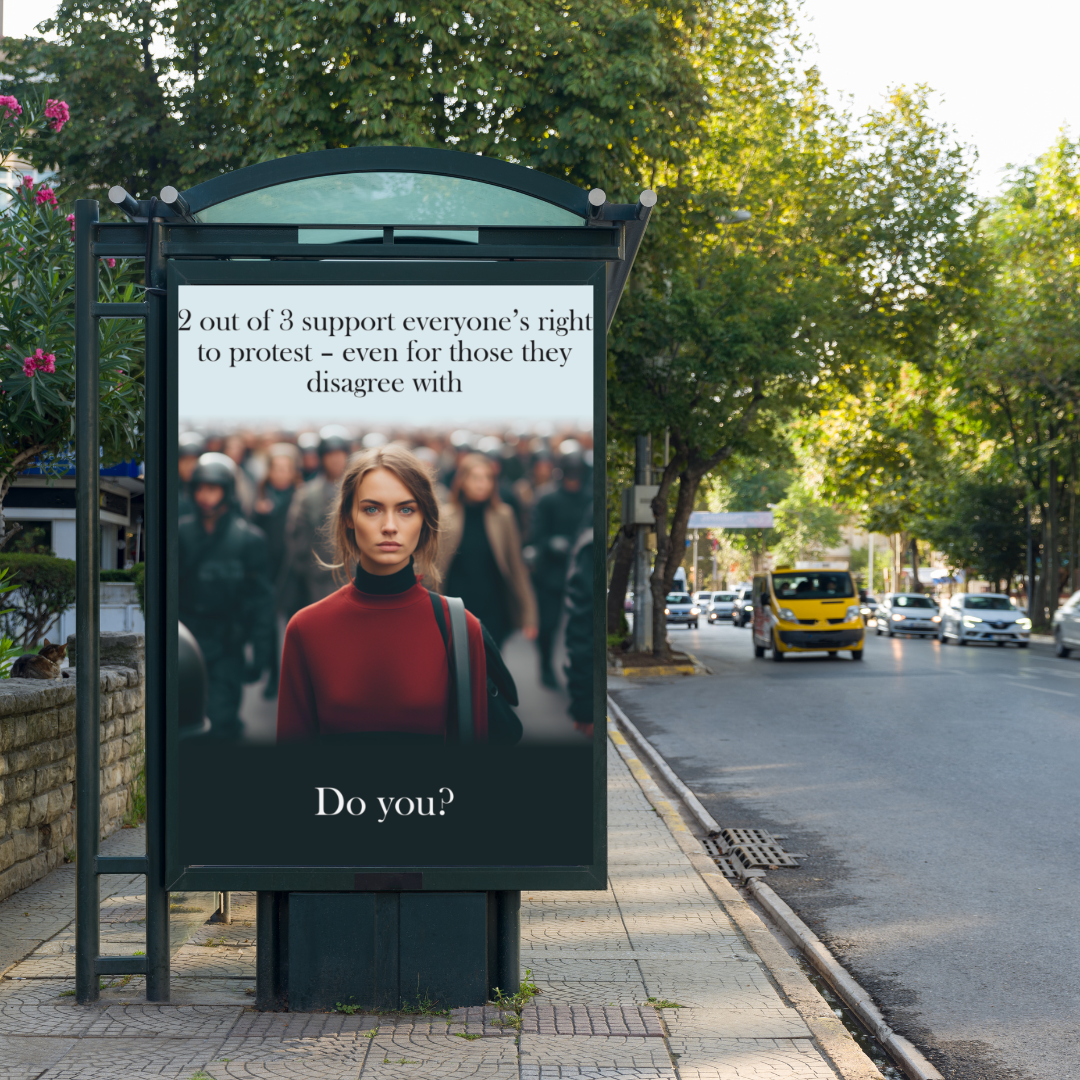
AdDem starts from the uncomfortable media reality citizens actually inhabit — compressed attention, high friction, and democratic messages competing with everything else on the screen.

Pressure 01

Time scarcity

Democratic information has to compete for seconds, not seminar-length attention.

Pressure 02

Complexity friction

Values are complex, but the entry point cannot always be complex.

Pressure 03

Intervention failure

Previous efforts have struggled because the format often ignores the actual information environment.

Why advertising?

Not because democracy is simple. Because attention is scarce.

If the medium shapes attention, democratic interventions have to study the medium too. AdDem examines whether advertising formats can make democratic principles easier to encounter, remember and reflect on.

Democratic values

Rule of law, rights, elections, tolerance and commitment to democratic principles.

Accessible formats

Short, visual, memorable messages designed for modern attention patterns.

Interactive prototype

Democracy Ad Lab

Choose a principle, switch the tone, and see how the message framing changes. Demo only — not official data collection.

Democracy ad concept
No one stands above the law.
Rule of law protects citizens from personal power.

Emotional civic appeal

Frames democracy as a shared protection: personal, direct and values-led.

How convincing is this framing?

You rated it 68/100. The project could test whether tone and format change democratic commitment.

Research framework

Problem → Ads → Experiments → Results → Impact.

AdDem pioneers a research agenda for pro-democratic interventions in the 21st-century information environment — from the problem, to ad design, to experiments, measurement and impact.

01

Problem

Design strategies that improve democratic commitments.

02

Democratic ads

Communicate democratic principles in accessible ways.

03

Experiments

Test which designs strengthen democratic values.

04

Results

Measure what works, for whom, and under what conditions.

05

Impact

Redefine pro-democratic interventions for the 21st-century information environment.

Map module

A global evidence map.

As experiments and findings grow, this module can show where democratic advertisements are tested and what each study reveals — without hiding the research journey behind academic tables.

The hard question

“But democracy is not a product.”

The project’s biggest challenge is also its most interesting question: can democracy be communicated through advertisements without becoming shallow, manipulative or partisan?

AdDem response

Advertising does not have to mean trivializing.

The research question is precisely whether accessible formats can communicate democratic principles without reducing their dignity or complexity.

Research team

The people behind Advertising Democracy.

AdDem is led by researchers studying democratic commitment, political communication and pro-democratic interventions.

Suthan Krishnarajan

Suthan Krishnarajan

Principal investigator

Leads the AdDem research agenda and the project’s central question: can democratic advertisements strengthen commitment?

Tadeas Cely

Tadeas Cely

Researcher · Postdoc

Postdoc researcher contributing to the Advertising Democracy project.

Melek Hilal Eroglu

Melek Hilal Eroglu

Researcher · Postdoc

Postdoc researcher contributing to the Advertising Democracy project.

Funding

Backed by Danish research funding.

The project is funded by a Sapere Aude Grant from the Independent Research Fund Denmark. Survey analyses for the preliminary stages are funded by Aarhus University Research Foundation.

Suthan Krishnarajan logo